Site geometry that narrows your options
- Can the generator or tower sit below the task on a slope, or does it need a level pad near grade? Cincinnati’s hillside lots and cut-through alleys often force offset placements.
- What is the run length to distribution panels or lighted zones? Longer cable or spill-light distances change wattage and voltage drop considerations.
- Are there overhead obstacles such as low utility lines or tree canopies common on older streets? That can limit mast height and trailer maneuvering.
Ground and access in a city of steep grades
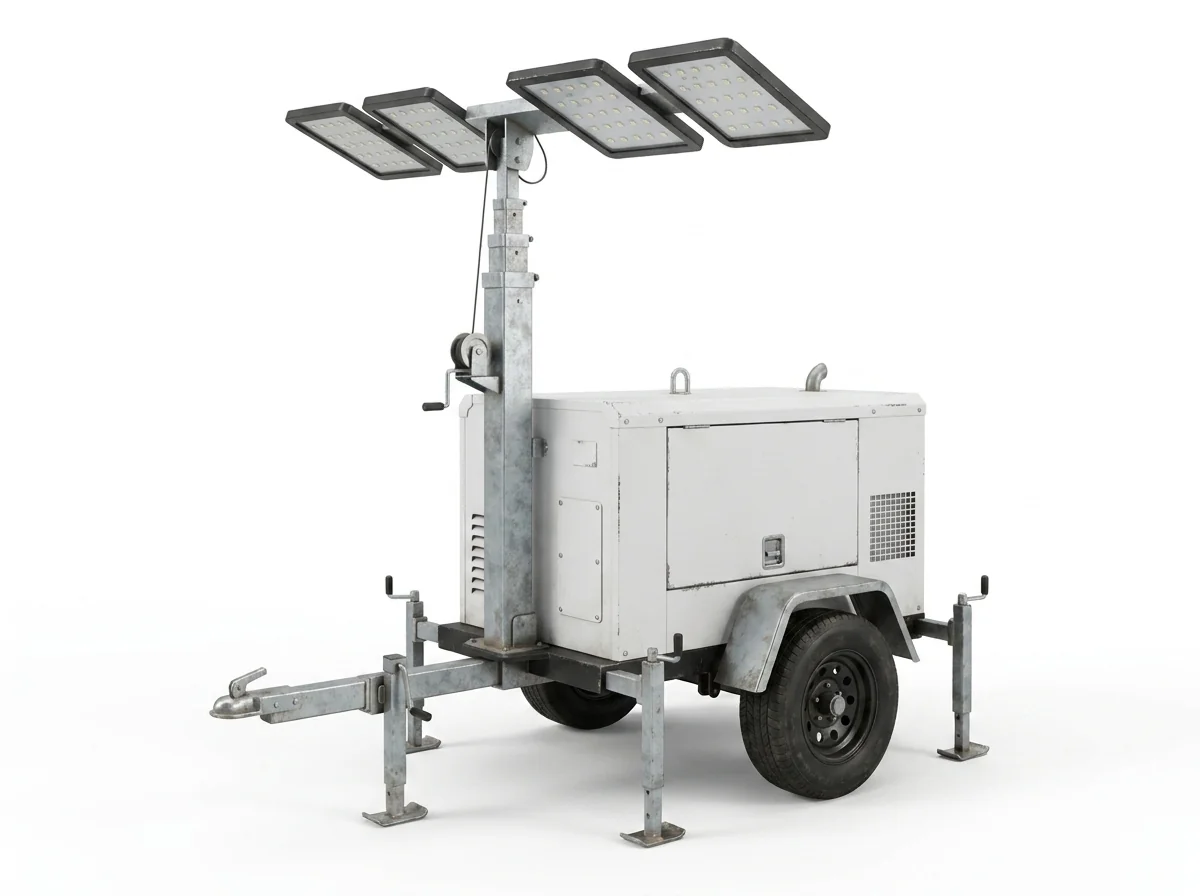
The local terrain places trailers and skid-mounted units on uneven approaches. Steep drive entries, brick alleys, and soft shoulders near retaining walls affect stability and site-stability planning provisions for light towers. For generators, plan for chocking and level tolerance when setting up on crowned streets or gravel lots at industrial sites.
Weather and runtime expectations
The regional climate moves from humid summers to freezing winters with frequent precipitation. That shifts the comparison toward: - Weather-protected enclosures and cold-start packages for outdoor generators - Corrosion-resistant light tower masts and sealed connectors - Extended-run fuel tanks or external hookups when overnight runtime is needed during long shifts at distribution buildings or hospital-adjacent projects
Output, distribution, and noise envelope
In dense neighborhoods and near institutional facilities, the acoustic footprint can be a deciding factor. Sound-attenuated housings and placement behind structures may be required. For power distribution, confirm panel distance, expected surge loads from lifts or HVAC start-ups, and any elevation changes that complicate cable routing.
Typical Cincinnati use patterns
- Warehouse inventory work often pairs indoor lifts with exterior generators positioned on sloped dock aprons. Confirm cable protection where it crosses traffic.
- Urban facade repairs in narrow historic streets favor compact, towable towers that can angle around parked vehicles and still cover upper elevations.
- Winter maintenance calls for enclosed, all-weather units to keep lighting and temporary heat supported during early sunsets and cold snaps.
Related lift decisions
If power or lighting supports elevated work, compare machines by surface and reach: - Interior reach with limited floor loading: see /electric-scissor-lift-rental/ - Uneven exterior grades and job sites: see /rough-terrain-scissor-lift-rental/ - High or offset tasks: see /boom-lift-rental/ and /articulating-boom-lift-rental/
Reach out through /contact/ with site geometry, grade, and expected runtime so the plan can be sized to the location and season.