When an articulating boom makes sense
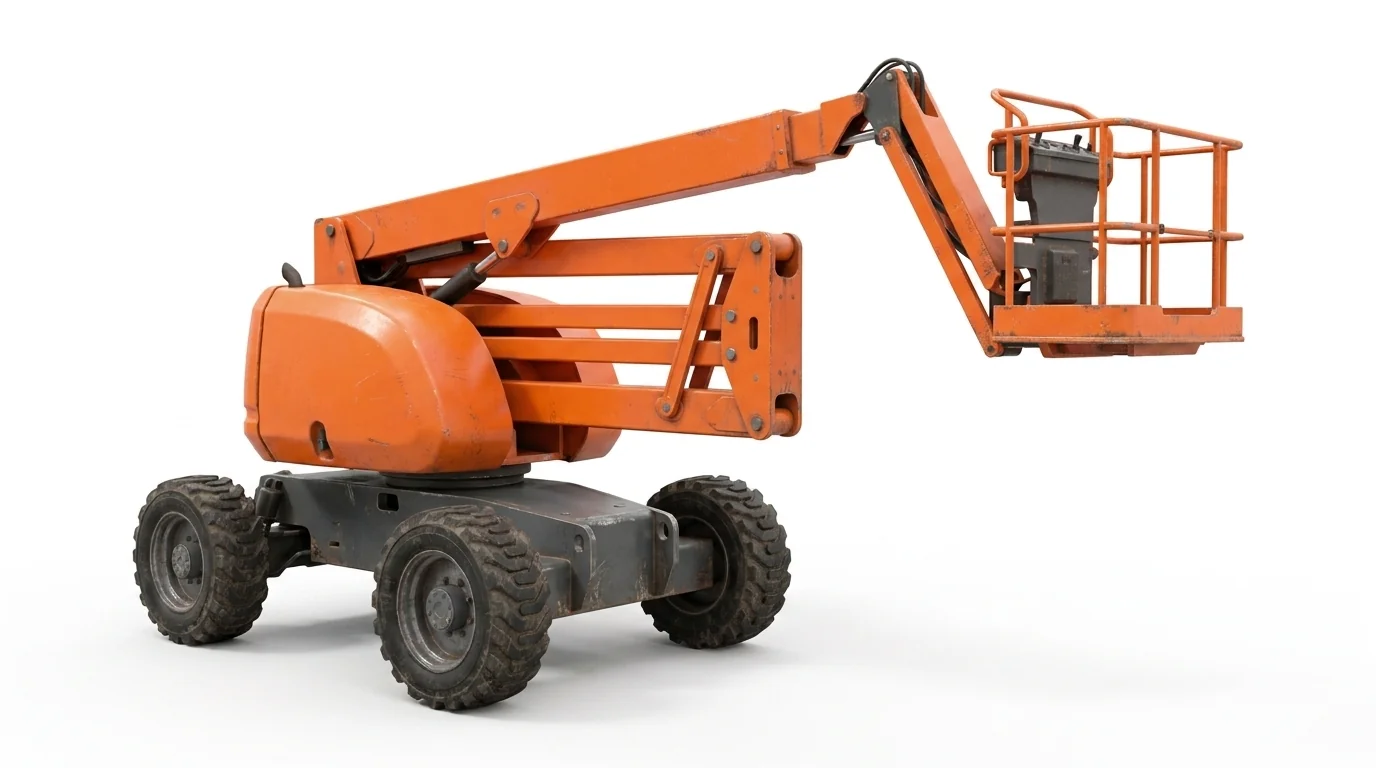
Articulating booms solve up-and-over geometry: HVAC above a setback, lighting under a truss, or facade work shielded by cornices. If the machine cannot sit directly below the task, or access routes thread through narrow service drives common to older neighborhoods, the knuckle sections help position the platform without extending the whole machine length.
Key planning points: - Can the machine sit below the task, or must the platform reach over a barrier? - What is the narrowest pinch point on the route to the work area? - Is the setup area level, sloped, or irregular?
Cincinnati terrain and weather factors
Cincinnati’s hillside lots and sloped commercial aprons often put one side of the chassis higher than the other. On steeper approaches or uneven fills, rough‑terrain configuration, oscillating axles, or track-style undercarriages may be necessary to maintain stability at height. The regional climate adds long, wet periods and winter freeze-thaw cycles, so plan for traction on damp surfaces and consider weather-protected controls for exterior tasks.
Power and tire choices by environment
- Interior industrial aisles: battery or hybrid units to limit emissions and noise. Check turning radius and overall folded width against doorways and racking.
- Outdoor sites on compacted base: rough‑terrain tires and four‑wheel drive help with soft or rutted sections.
- Historic infill alleys: narrow‑chassis models with zero tail swing reduce risk where masonry faces and stair rails pinch the travel path.
For purely vertical work inside distribution buildings without obstacles, compare options at /electric-scissor-lift-rental/ or mixed-surface slab work at /rough-terrain-scissor-lift-rental/. For long, direct reach with no up-and-over need, see /telescopic-boom-lift-rental/.
Measurements that narrow the choice
Have these on hand before you call (513) 810-5698: - Ground to target height and horizontal setback from the machine’s likely position - Smallest doorway, gate, or alley on the route to the work zone - Slope at the setup pad and surface type (slab, asphalt, aggregate, turf) - Overhead obstacles: power, signage, soffits, tree limbs
Actual site conditions, the selected unit’s instructions, and job procedures govern how and whether work proceeds.
Related categories
- Straight-line exterior reach: /telescopic-boom-lift-rental/
- General aerial overview: /aerial-lift-rental/
- Material staging to elevated decks: /telehandler-rental/